
PCI Compliance Made Easy
Article provided by Basys
Understanding PCI Compliance and Its Importance
If your business accepts credit card payments, PCI compliance is essential. However, navigating compliance requirements can often feel overwhelming.
What is PCI Compliance?
PCI compliance refers to the Payment Card Industry Data Security Standard (PCI DSS) - a set of security rules designed to protect customer payment information during transactions. These standards help reduce fraud, safeguard sensitive cardholder data, and ensure businesses process payments securely.
Think of PCI compliance as a security checklist for your payment processing. Whether you’re accepting payments online, in-store, or on the go, compliance ensures your business follows best practices to prevent data breaches.
Why PCI Compliance Matters for Your Business
Many business owners don’t realize the real risks of noncompliance until it’s too late. Here’s why staying compliant should be a top priority:
- Protecting Customer Data: PCI compliance keeps your customers’ payment information secure, building trust and preventing fraud.
- Avoiding Costly Noncompliance Fees: Falling out of compliance can result in hefty fines, unnecessary fees, and even the potential loss of your ability to accept credit card payments.
- Preventing Fraud and Data Breaches: Compliance helps protect your business from cyber threats, reducing the risk of financial loss and reputational damage.
- Meeting Industry Standards: Being PCI compliant signals to your customers that your business takes security seriously, reinforcing your professionalism and credibility.
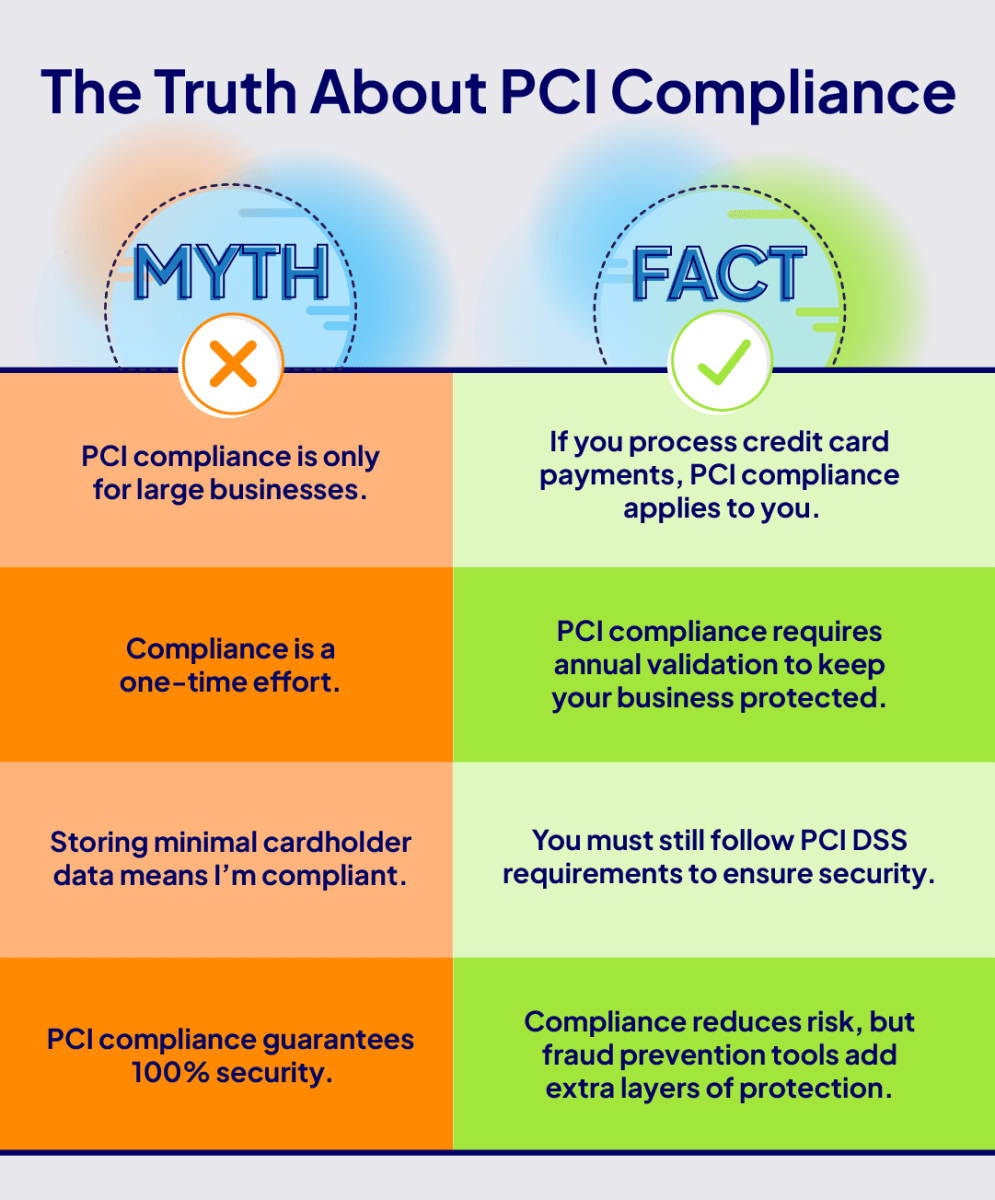
Common Misconceptions About PCI Compliance
There’s a lot of misinformation about PCI compliance. Basys helps clear up common myths, ensuring you have accurate information to keep your business secure.
Have questions about PCI compliance? Let Basys, a PIAG, partner help. Contact them today to help simplify your compliance journey and protect your business.